On July 2, we bid adieu to Kevin & Kristi (and air conditioning! Remember, this is the time of The Heat Dome) and headed to upstate New York for the next two weeks. In this post, we’ll revisit those days, including our stay at a mushroom farm near Ithaca, the shores of Lake Ontario, the Baseball Hall of Fame, and the Catskills.

July 3-5: Mushrooms and Gorges
We’re really diving into Hipcamp this season and finding some very unique spots to park the BettyMobile, including Hawk Meadow Farm near Ithaca, where our campsite was in the woods amidst their log-grown mushroom farm. We ventured into Ithaca where they were decidedly NOT celebrating America 250, but the falls were beautiful as predicted. We also drove/walked around Cornell University, got some nice views of the town and Cayuga Lake, and scored a great lunch + World Cup at Revelry brewpub.


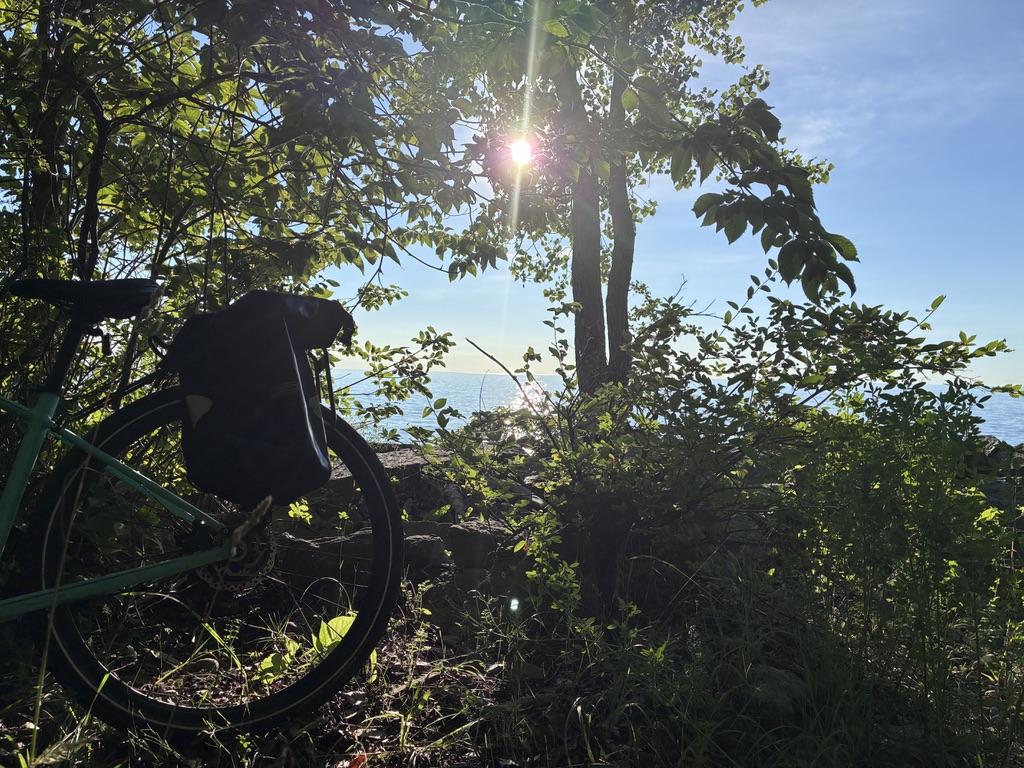
July 5-10: Western Shores of Lake Ontario
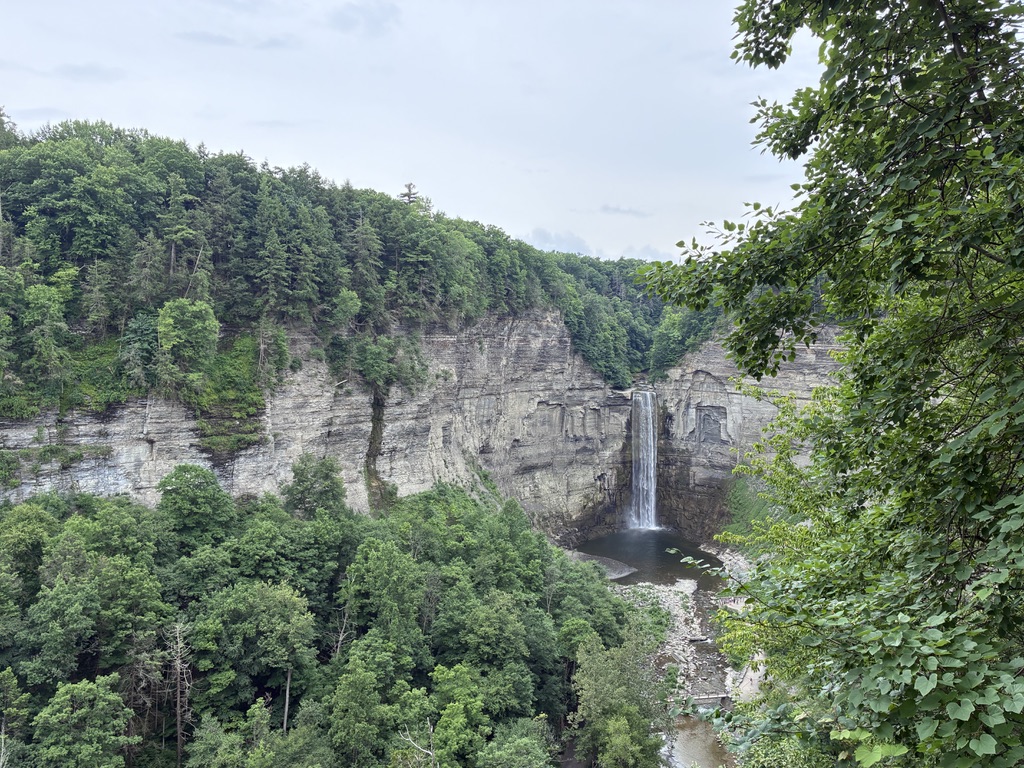
We took a nice leisurely route from our mushroom farm north, including a viewing of Taughannock Falls (30′ higher than Niagara!), and a long lunch stop in Seneca Falls. This town is significant as the site of the first women’s rights convention in 1848, but in some ways that historical notability is dwarfed by the town’s claims to be the inspirational setting for Bedford Falls in “It’s a Wonderful Life.” Movie crews never set foot here, but there’s a museum, the “It’s a Wonderful Scoop” ice cream store, and plenty of movie-related trinkets to buy. The Women’s Rights Park is a nice tribute to Elizabeth Cady Stanton, and it really is a very cute town. Walking their downtown streets on a Sunday afternoon takes you straight back to the late 1800s thanks to the marching band music they pipe through outdoor speakers down main street. Delightful!

Our destination was Selkirk Shores State Park, near Oswego, in a campground that is VASTLY different from our quiet mushroom farm. We have RV walls on both sides, including one family that likes to play the local commercial rock radio station on their outdoor speakers which are pointed right at us. They like that station so much that they play it for us even when they aren’t around. It’s nice to see families having some R&R together here, but it’s one of those campgrounds that is the destination, so everyone is hanging around here most of the time instead of heading out on daily adventures elsewhere.

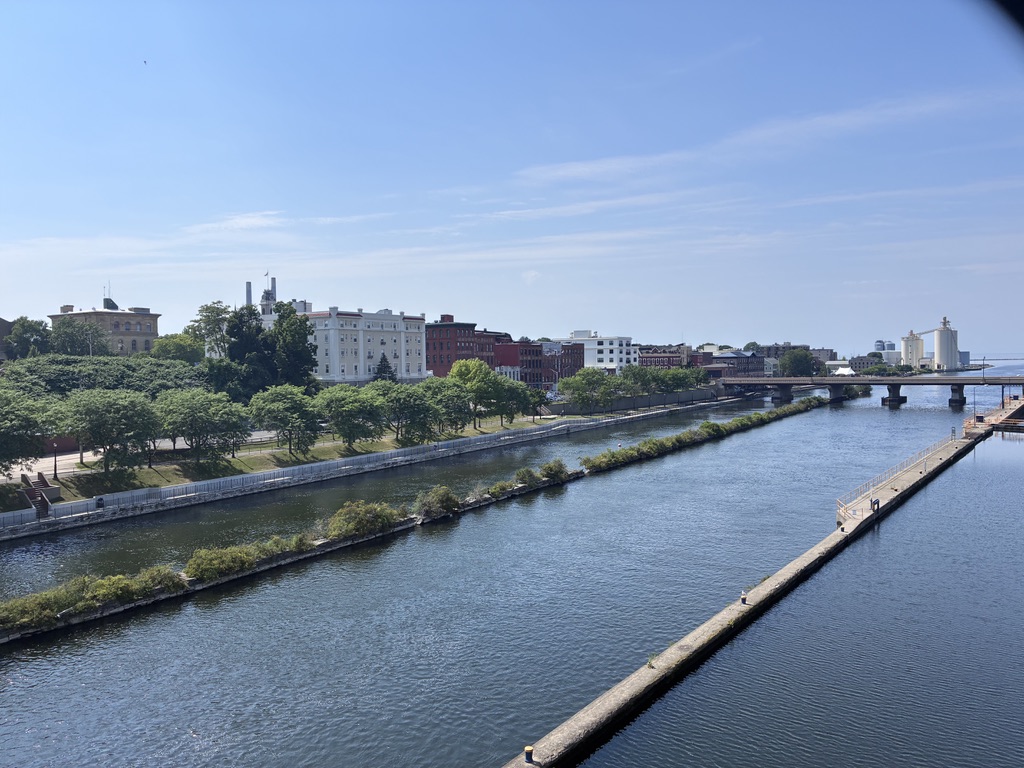
Our days in this area are pretty low-key: we catch up on work tasks and explore the curious local towns and lakeshore sites. For example, Mexico Point, where some guy in the late 1800s built an elaborate hotel and retreat area where city folk could escape the heat and play games. But there were fires, and rebuilding, and more fires, and now it’s just some stone wall remains and an occasional community event. Why is it called Mexico? Because the German guy who originally claimed the area in the late 1700s was fascinated with Central and South America. Go figger. Oswego is interesting: 19th-century architecture combined with the nuclear power plant that looms on the horizon and the Oswego Canal that connects the Erie Canal to Lake Ontario. Pulaski is a cute little town boasting “the World’s Best Salmon Fishing” (of course we Alaskans know that PR campaign is BS!).
We spent one day wandering further north to check out other state parks. We start in Sacketts Harbor, which was really fun! The whole town is a designated historic district, famous for the role it played in the War of 1812 as a vital shipyard (and apparently NY’s 3rd largest city in 1812-1814), and it’s beautifully restored/preserved. A big highlight for us was the Whisky Coop – a sweet little restaurant with an outdoor patio serving a perfect combo of great chicken and delicious whiskey cocktails. Our other State Park visits were less satisfying, however. On the map, Robert Wehle SP has a “unique area” and might have some nice 4-mile hikes, but the park is mostly dedicated to Wehle’s breeding of English pointers, there is scant info about the trails, and the most unique thing we saw was statues of dogs everywhere. We move on to Sandy Island Beach SP, which looks like a promising long barrier island to explore, but alas, the park itself is quite small and the rest of the island is privatized.




July 11: Cooperstown!
Keeping with our baseball-themed summer, we spend an afternoon/evening in Cooperstown at the Baseball Hall of Fame. Well, before we can even get to the BBall HOF, we have to park the car and camper – which allows us a great deal of time driving around the downtown, clogged with crossing tourists, and some of the outskirts, where we finally find a spot on a street that even offers some blessed shade.
A word about these tourists. Matthew, at least, is surprised by the number of youth – most with ice cream in their hands, walking along the sidewalks and across the streets like ducklings with a weary adult at each end of the line. They are all wearing the same ballcap. Of course – what do you do when you manage a Little League baseball team but promise a weekend in Cooperstown?! And, there are plenty of other kinds of folks making their journey to hallowed lands that ostensibly (thought not really) gave the world it’s greatest pastime of baseball. We see plenty of Japanese tourists (and indeed, there is a whole section of the BBHOF that is devoted to Japanese players and fandom) and plenty of old guys that Matthew suspects have a suitcase filled with baseball cards in the trunk of their old Impala.
As for the museum itself? Matthew has some comments. First off, the actual Hall of Fame (really, “Halls of Fame”) is everything it should be. It is kind of like walking into an old European cathedral, but the transepts aren’t filled with tortured saints, just burnished bronze plaques of name after name of great players.

The other two floors of the space are filled with exhibits mostly telling the story of why some of those names on the first floor rightfully deserve their spot on the walls. And then there is a substantial amount of space given to baseball history itself – the evolving rules, equipment, and overall mechanics that make the sport what it is today. Here’s where Matthew has some advice for the curators. So many of these exhibits just tease the details, but don’t take the story all the way to home plate. There’s an exhibit on safety equipment, and you can see what a catcher wore in the 1920’s, but not a full uniform of what they wear today. Here’s a glass display of an old leather bound rulebook, but what about today? Where do we go to understand the “fourth out” rule? When were batters required to “present bunt” and why? That’s the stuff that would bring the story home for old Matt.
There was, however, one display that we could find no fault with, and that was the private collection of bobbleheads. There must’ve been eight display cases full, each equipped with a jitter function, because what is the point of a bobblehead if not to bobble?
The campground we stayed at had two ballfields attached. Clearly this is where you go with your team after a day of ice cream and BBHOF. Cooperstown also hosts Little League tournaments – as we left we passed many many ballfields ready for action.


July 12-16: Catskills
Lovely backroads drive to Kenneth Wilson State Park, a highly-rated campground in the Catskills west of Woodstock. Our assigned site was impossibly tight and uncomfortably close to a couple of guys with three barky dogs, so we appealed to the sympathies of the park ranger and scored a huge site with plenty of space to spread out. The whole campground, including this site, is full of trees, which is wonderful for shade and privacy, but terrible for Starlink and getting any work done. Our few days here actually require quite a bit of work focus and internet access, giving us the opportunity to find several creative spots to hang out, ranging from a picnic table near the playground under a big open sky to a sweet public library in Shokan where they have a live bee display, to a beautifully restored historic building in Kingston, NY, which now functions as a co-working space. By the way, this was during the days of heavy smoke from Canadian wildfires, so we’re grateful to have found nice indoor spaces to work and breathe.

We especially enjoyed Kingston. It’s a nice mix of history and interesting old architecture (including buildings from the mid-1600s!) with vibrant present-day work and community life. While in the area, we also explored all the “kills” (which is Dutch for creek/river – e.g. Catskill means Cat Creek.). Beautiful windy roads through forested hills, past rivers and waterfalls, and dotted with charming houses and small communities. We didn’t spend much time in Woodstock – at a glance it looks like a quaint community but very touristy, which didn’t hold strong appeal for us.
Fun fact: Yasgur’s farm (the Woodstock concert site in 1969) was actually about 60 miles SW of Woodstock. Sounds like those event planners had a hard time getting permits – Wallkill was the second option, before Yasgur saved the day. Seems like a miracle that so many thousands of people found the festival!

En route to our next destination, we stop at The Diner near Davenport, a small town west of Albany. 
Vintage tables and sassy narrative, just our style! 
We were planning a Caesar salad for dinner and asked if we could buy one egg. They laughed and said they wouldn’t let us buy it. 
We’re camping near the town of Shokan, on the Ashokan reservoir. Fans of the tune “Ashokan Farewell” might recognize the musician who was playing a show at the Shokan library … 
We really like Kingston. Nice mix of history with a currently vibrant town. 
Creative restoration of NY’s first Senate meeting house … 
…. the second floor has been converted to a beautiful co-working space. 
World Cup everywhere, including in this bookstore / coffee house / bar. 
We explored a little bit north, up to Katerskill Falls, along the Hudson River, and through Woodstock. Scant photos to prove it though. 
There were some mountain roads that reminded us of the steep stuff out west. 
But we did document the finest campground dishwashing station we’ve ever seen!
Coming up next: We stow the Bettymobile in a Rhode Island junkyard and head into Beantown!
Dear K & M & M & K and Betty mobile. Awesome report. Years ago i want to the BaseBall l hall of fame,
Not much to report from here. Staying out of trouble and behaving. Aloha, Jeff B Safe Travels.
Nice story.